The Backstory
This was 2009. The Barbarian Group was at its peak—Cannes Lions, Webbys, the whole thing. Rock Hall's analytics showed they reached 20x the audience online as coming through the door. It was time to change the relationship the museum had with the digital world.
The Problem
Rock Hall had stakeholders the way a carcass has vultures—Cleveland executives, a New York board, downtown business owners, legacy consultants who wanted the work we'd won. Everyone had an opinion about what RockHall.com should be:
- "It should be tickets and tour dates."
- "It should be the Wikipedia of rock and roll."
- "It should be Web 2.0—ratings and comments."
All valid. All wrong.
Every museum site has tickets and tour dates. Wikipedia already exists. And Rock Hall's entire value is that they decide who's in and who's out—letting users vote would undermine the authority that made the institution matter.
We had to decide what the project actually was.
The Strategic Position
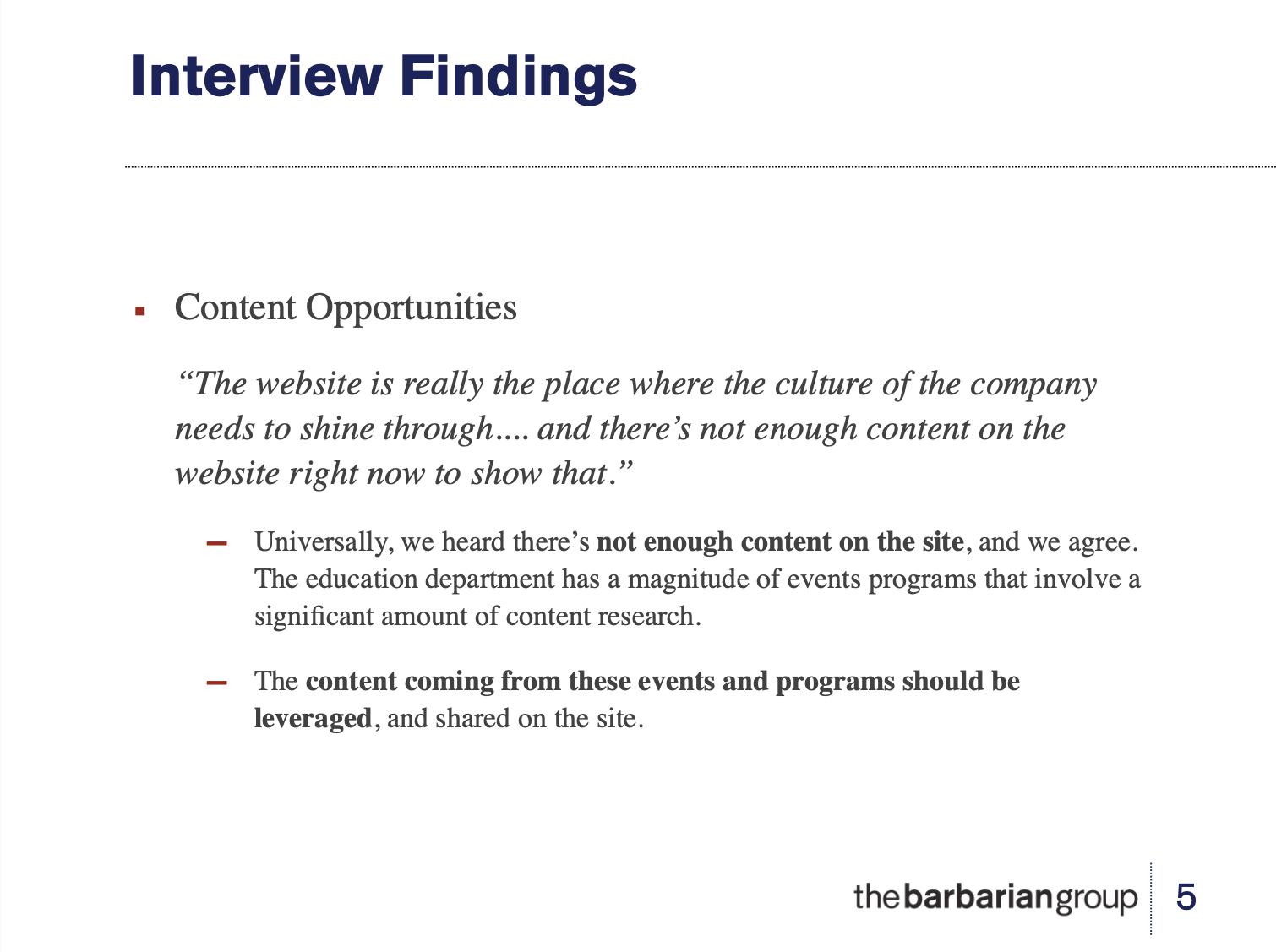
Through three months of research, interviews, and analysis, I wrote the line that defined everything:
"Create a dialogue around stories told from our perspective of authority."
That single line became the filter. Every subsequent decision—content model, information architecture, CMS design, publishing workflow—flowed from it. (Certainty is short.)
The System
The old site had 5,000 pages of completely unstructured content. I designed the system that would replace it.
Content Model
We modeled multiple content types for different purposes: Inductee Pages, Exhibits, Video archives, Evergreen Stories, Blog Posts. With input from the historians at Rock Hall, we created small atoms of content that could be used in more than one context.
Every page had metadata: Featured Artist(s) and Genre. We could grab atoms from larger pools—"show me other content from the genre of Blues."
Information Architecture
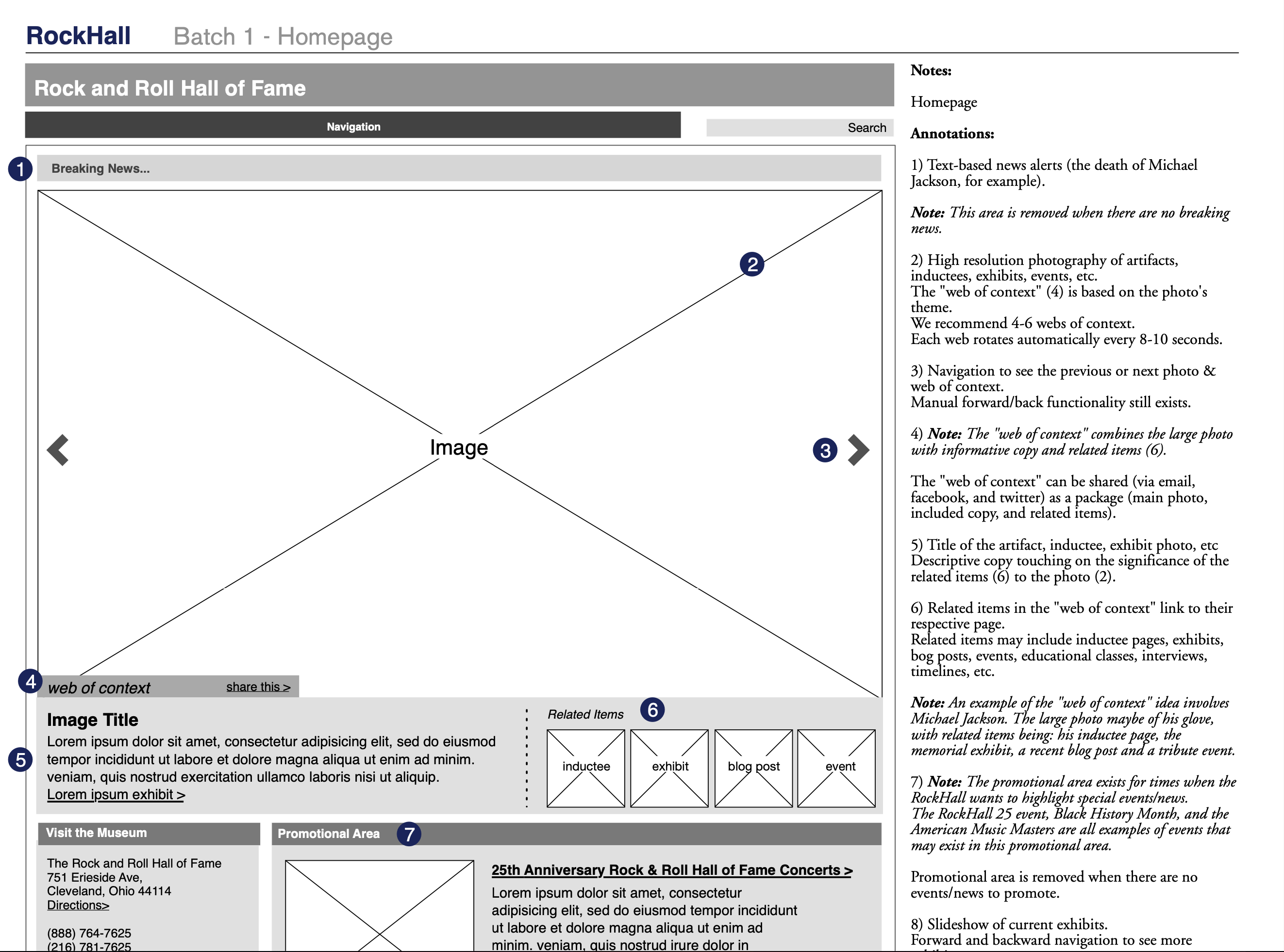
Broad questions answered at the top of the hierarchy. Specific questions answered at the leaves. When Michael Jackson died during our discovery phase, Rock Hall could surface everything they knew—automatically, because the content model supported it.
Publishing Infrastructure
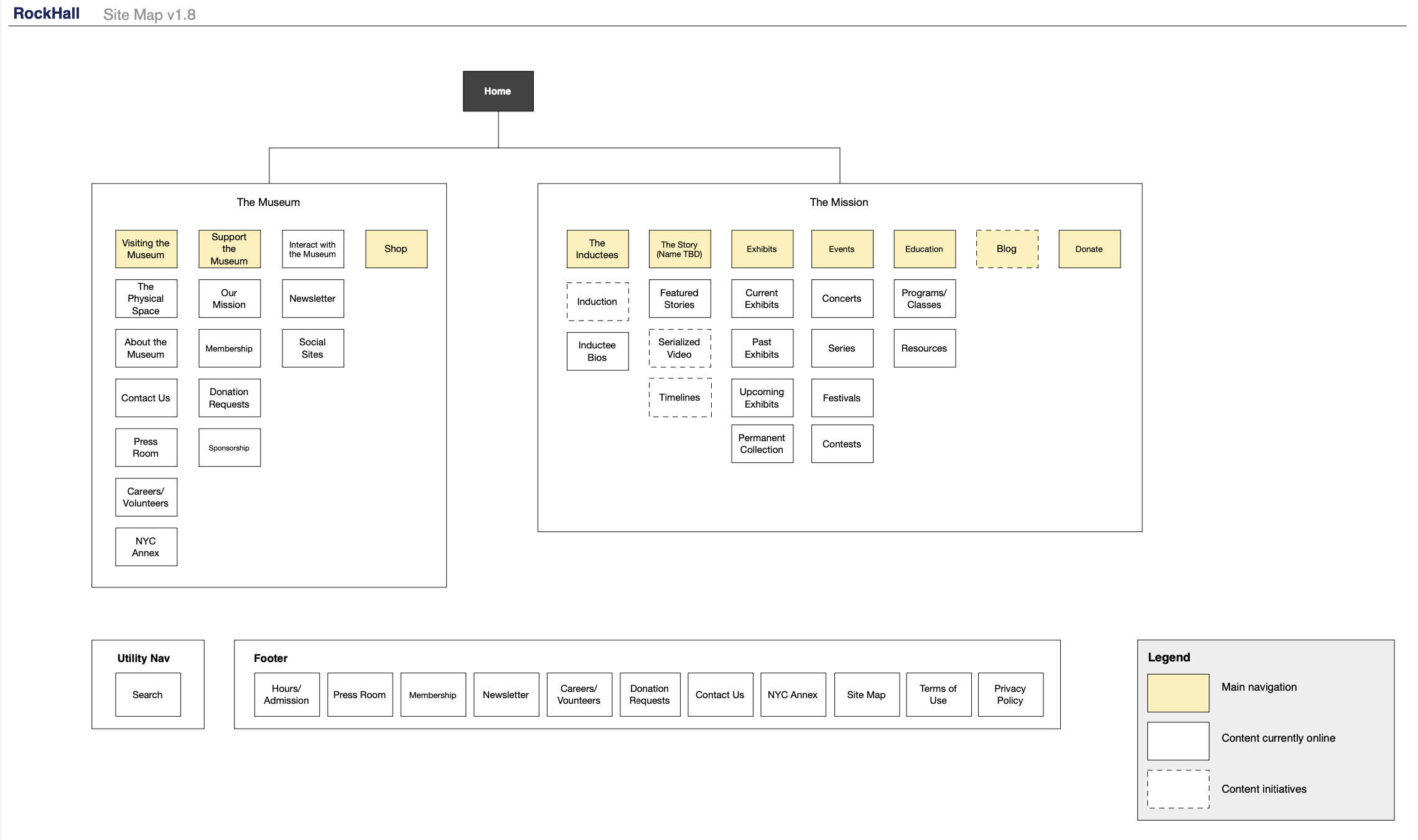
Custom CMS in Python/Django, specifically chosen for its ability to relate content to content. I was the primary author, building pages while we built the system—and then trained 30 people to use it.
Response Capability
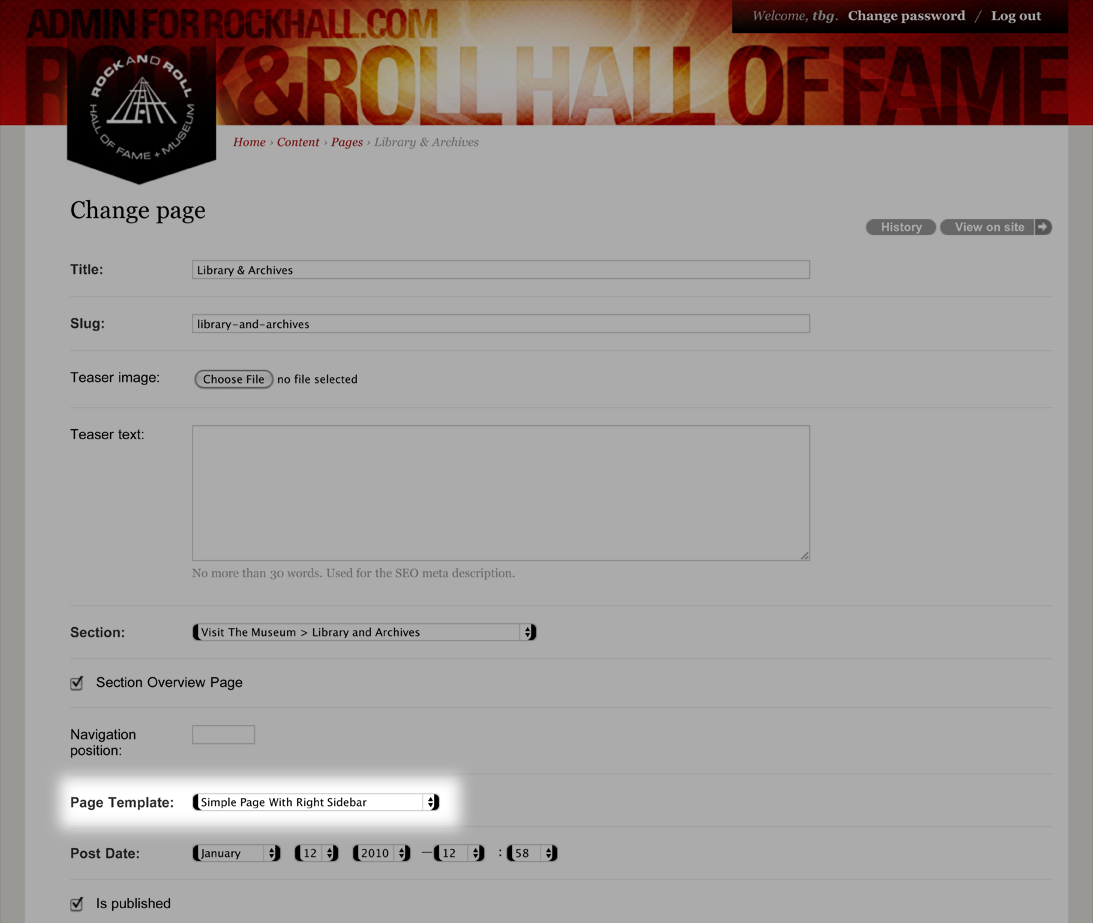
The system could react to the world. Breaking news banner. Contextual content surfacing. When relevance spiked, Rock Hall could meet the moment—not because someone scrambled to create content, but because the system already knew what existed and how to surface it.
The Results
Peak traffic during events exceeded previous years. Page views per session more than doubled. Bounce rate dropped from 62% to 34%. Time on site doubled.
Traffic to the Inductees section: up 1,500%.
Traffic to the store: up 13,000%. Not a typo. Thirteen thousand percent. Strategic placement turned a gift shop into a destination, which is either information architecture or a magic trick; the difference is mostly vocabulary.
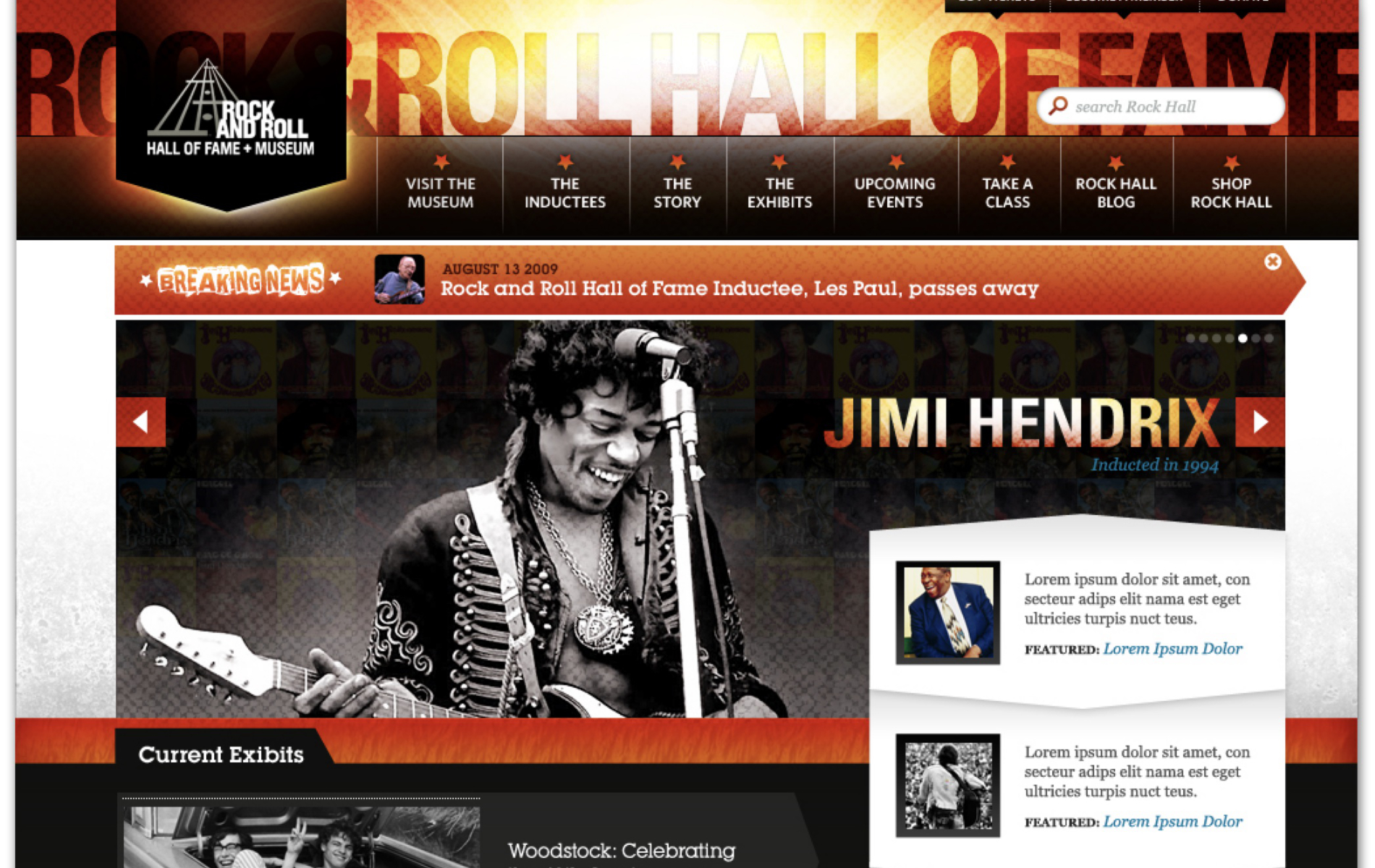
Then Google released the "MayDay" update, rewarding fresh content. The system was already built for it. Rock Hall could publish fast, publish contextually, and publish at scale. The infrastructure paid dividends we hadn't anticipated.
Why This Project Changed Me
This is where I stopped being a UX designer.
I didn't know it at the time. I still called myself that for another decade, the way you keep wearing a band's t-shirt long after you've stopped listening to the album. But looking back, Rock Hall was the turn.
The deliverables were familiar—sitemaps, wireframes, CMS templates. The work wasn't about the deliverables. It was about identifying a strategic position. Designing a content system that could express that position at scale. Building infrastructure that let the organization respond to the world in real-time.
I didn't design screens. I designed the system that made screens mean something.
Every project since has been a variation on that discovery. What's the underlying position? What's the system that supports it? What infrastructure makes it executable?
Rock Hall was the first time I understood: the experience isn't the interface. The experience is the system underneath. The rot was already there. I just followed where it wanted to go.