The Problem
Mailchimp's customers knew how to use Mailchimp. They didn't know how to do marketing.
The knowledgebase was a map of the cockpit. Nobody had explained flight. Or what to say. Or who to say it to. Or when.
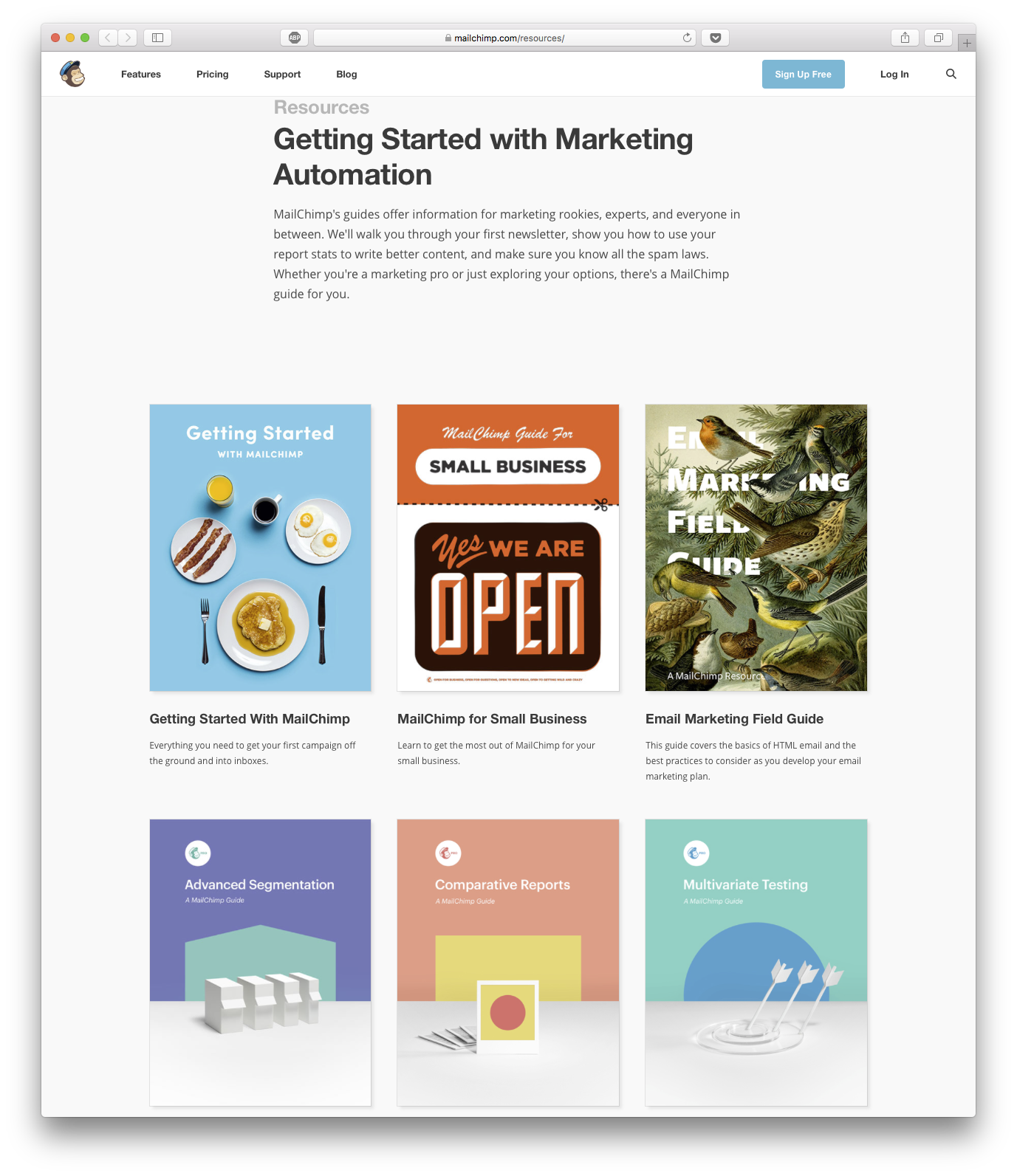
Customers thought of marketing as a black box—throw money in, hope more comes out the other side. They didn't understand why they were doing what they were doing. And the content that was supposed to help was out of date, often flat wrong, living on a separate server with a fraction of the traffic.
The question: How do you teach people why to do marketing, not just how to use your tool?
How I Got Here
My first project at Mailchimp was a massive restructuring of external communications—thousands of unstructured pages that needed a content model. I audited the content, arranged it using Google's Zero Moment of Truth framework: broad questions answered at the top of the hierarchy, specific questions answered at the leaves. The structure worked. The project didn't launch—the scope required outside help to execute.
But the audit revealed the gap. Mailchimp had product documentation. It had no marketing education. Research confirmed it: customers didn't understand why they were doing what they were doing. They knew how to send a campaign. They didn't know why segmentation matters more than list size.
That gap became the second project. I inherited the content team responsible for product marketing and blogging, then hired for content creation and governance skills. Nine people in total.
The System
The Content Model
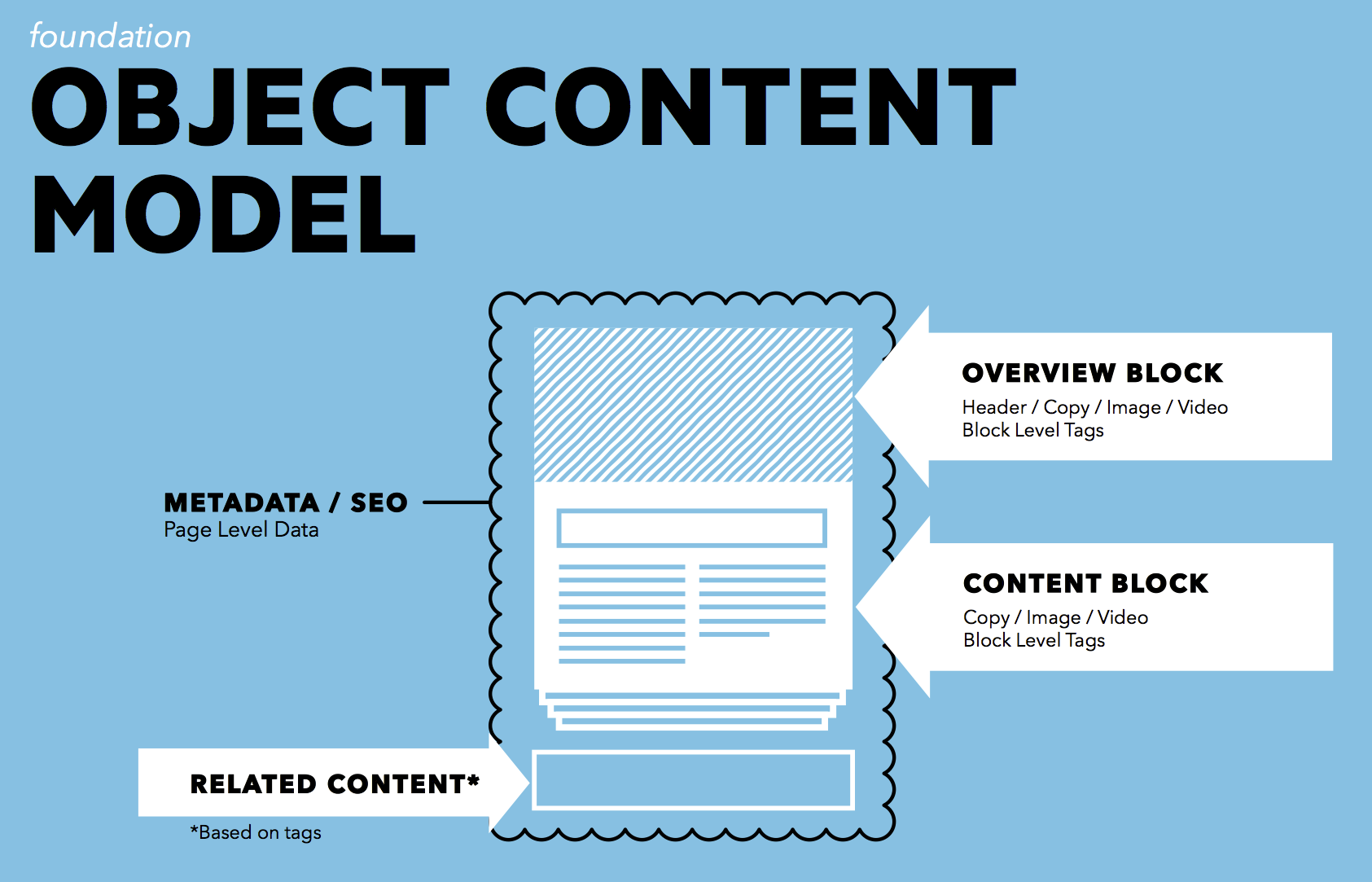
We audited everything again: Keep, Edit, or Kill. Three words. Every page sorted into one of three piles, and the Kill pile was the largest, which tells you something about what accumulates when nobody owns the system. Surviving content was restructured to match a model I designed inside a custom WordPress installation—custom fields, structured content blocks, metadata for SEO, related content links. Every piece could be distributed across channels from a single source.
The Stray Cat Program
Here was the problem: nobody at Mailchimp knew how to use Mailchimp. Not for real marketing. The knowledgebase could tell you where to click. Nobody on the content team had ever run a campaign for a real business with real stakes. They were writing recipes without cooking.
So I made them cook.
Every team member adopted a real local business—a "stray cat." They became that business's email marketer. They learned by doing: migrating a client from Constant Contact (not easy), collecting first-party data, segmenting lists for targeted campaigns, measuring what worked. Some team members adopted multiple businesses. One hire who came from support was happy to take on as many as she could.
My stray cat was a boutique hairdresser who worked in New York, Atlanta, and Los Angeles. She advertised availability and booking via email. I learned to segment her list by city so only LA customers received LA-relevant emails. Open rates increased. The targeting kept her emails relevant instead of noisy.
The point wasn't the individual results. The point was the system: a content team that could write about email marketing because they'd actually done email marketing. Not research. Not interviews with practitioners. Practice. You can't teach what you haven't failed at.
Content as Intervention
Educational content wasn't siloed on a blog. We worked with product to find areas of impact for in-line content—places where the application was losing people and education could intervene.
The biggest example: 59% of users bailed at the template selection screen when setting up automations. More than half, gone at one step. I couldn't change the product—I had no influence over those decisions. So content became the fix. We edited the microcopy, linked to Resources content explaining why automations help your business, and added instructional guidance at the exact point of failure.
Sometimes the intervention was a single line of microcopy. Sometimes it was a deep link to a full guide. The content system and the product shared a surface—the educational layer wasn't separate from the application. It lived inside it, the way the rot lives inside the wood: not an addition but an always-present fact you either work with or ignore.
What This Enables
The old model: customers learn the product, figure out marketing on their own, churn when they can't translate tool knowledge into business results. (Switching costs are the moat every SaaS company builds and nobody advertises.)
The new model: customers learn marketing through the product. The platform doesn't just enable campaigns—it teaches you why those campaigns matter. Education deployed at the point of failure, not on a blog three clicks away.
A tool helps you execute. A system helps you understand what to execute and why.